0

 0
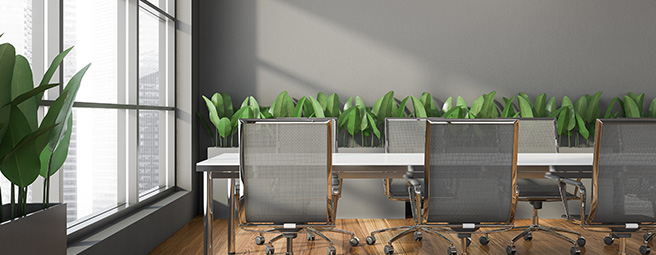
Stop Wasting Budget on Empty Boardrooms: The Real Cost of Unused Office Space
The unused office space cost on most balance sheets is larger than anyone has measured. A boardroom that hosts a client review twice a month still generates rent, utilities, insurance, cleaning, and furniture depreciation on the other twenty working days. Nobody receives an invoice labeled “empty room,” so the expense hides inside the lease. It only becomes visible when someone divides the annual cost of the room by the hours it is used.
The wider market shows how common the problem is. National office vacancy stood at 18.2 percent in the third quarter of 2026, and even the post-pandemic attendance record left offices at roughly 56 percent of their pre-2020 occupancy. Tenants are paying for space their teams do not fill, and the boardroom is usually the emptiest room on the floor.
That gap matters because office space is not cheap. The national average listing rate sits near $33 per square foot a year, and rates in the most expensive markets run about twice that. A 400-square-foot boardroom can easily carry five figures in annual cost before anyone books it.
Hybrid schedules make the pattern sharper. Attendance clusters in the middle of the week, so the boardroom may be contested on Tuesday afternoon and silent from Thursday evening through Monday. Leaders see the busy days and conclude the room is needed. Finance sees the lease and assumes the cost is fixed. Neither view captures what the business is buying, which is a few hours of professional meeting space each week at the price of a full-time room.
This post shows how to calculate the real cost of space you do not use, when on-demand meeting rooms become the better option, and how to reduce overhead without looking less professional to clients. It finishes with practical scenarios, an implementation plan, and the questions that decide whether a dedicated room still earns its place in your lease.
Key Takeaways
1. Empty Rooms Still Cost Money Rent, utilities, and furniture costs run every day, not only on meeting days. Dividing annual cost by hours used reveals the true price.
2. Measure Real Usage Booking calendars overstate how often rooms are occupied. Badge data or a two-week sample gives a more honest figure.
3. Occasional Meetings Favor Rental Teams that meet a few times a month usually pay far less with on-demand rooms. The savings grow in expensive downtown markets.
4. Professional Image Survives Downsizing Clients judge the room they meet in, not the lease behind it. A well-equipped rental room makes the same impression.
5. Pilot Before You Commit Test on-demand rooms for a few months before changing a lease. Track spend and feedback, then decide.
How Much Does Unused Office Space Cost a Business?
The cost of unused space is the share of fixed occupancy expense tied to hours when a room sits empty. Start with the annual lease cost for the boardroom or meeting suite. Add utilities, insurance, cleaning, furniture amortization, and any dedicated AV or IT support. Divide the total by the hours the room is occupied. The result is the effective hourly rate of the room, and it is usually far higher than anyone expects.
A Worked Example
Consider a 400-square-foot boardroom in a mid-priced market at $35 per square foot. In this example, base rent comes to $14,000 a year. Assume operating costs, furniture, and equipment add another $4,000, for a total of $18,000. If the room is used 100 hours a year, roughly two hours a week, each occupied hour costs $180. A comparable on-demand room for the same meeting costs a fraction of that.
The math gets worse in high-cost cities. Office listing rates in Manhattan and San Francisco recently averaged about $70 and $63 per square foot, nearly double the national figure, so the same room used the same number of hours can cost well over $300 per occupied hour.
Unused Space Cost Checklist
• Annual rent for the boardroom or meeting area
• Allocated operating expenses (utilities, insurance, taxes, common area charges)
• Furniture and fixture depreciation or lease payments
• AV equipment, maintenance, and software licenses
• Cleaning and consumables specific to the room
• Opportunity cost of capital tied up in the lease
• Actual occupied hours from booking or badge data
Multiply the annual total by the share of time the room sits empty. That figure is the unused office space cost you can compare against on-demand alternatives.
When Does Renting Meeting Rooms Beat Keeping a Boardroom?
On-demand rooms become the better financial choice when your closed-door meeting hours stay below the point where a dedicated room pays for itself. For most small and midsize teams, that point is higher than their real usage. A room needs to be busy most working days before the fixed cost starts to look reasonable.
Hourly rates explain why. Professional rooms on the Davinci network start at $10 an hour, and most small and medium rooms sit well below the effective hourly cost of an underused boardroom. A team that holds two three-hour client meetings a month books about 72 hours a year. Even at a premium downtown rate, that spend rarely approaches the annual cost of a dedicated room.
Room type still matters. A suburban huddle room used for internal stand-ups is easy to replace, because most stand-ups need only a compact space for two to six people with a screen and a good connection. A downtown boardroom used for high-stakes pitches carries more weight with clients, but it can be replaced just as well by a well-chosen rental. The decision should follow measured usage, not the prestige of the existing lease.
Office Space vs. On-Demand Room Comparison
|
Cost Element |
Dedicated Boardroom (Annual) |
On-Demand Meeting Rooms (Same Usage) |
|
Base occupancy |
$14,000 to $25,000 or more |
No fixed cost |
|
Operating expenses |
Allocated every month |
Included in the booking |
|
Furniture and AV |
Capital or lease cost |
Included in the hourly rate |
|
Effective hourly cost at 100 hours a year |
$140 to $250 or more |
Booked rate only |
|
Flexibility |
One address |
Any city and room size |
|
Client impression |
Consistent |
Consistent when the room is well chosen |
The table shows why occasional use favors on-demand rooms. Heavy, daily use in one city can still justify a dedicated space or a monthly package of hours.
How Can Businesses Reduce Office Overhead Without Looking Less Professional?
Cutting overhead does not mean moving client meetings to a coffee shop. A professional meeting room delivers the same setting your clients expect (furniture, display, Wi-Fi, a receptionist to greet them) without the fixed cost of empty hours. Pair a smaller footprint or a virtual office address with rooms booked only when needed. Clients see a polished environment, and the business pays only for the time it uses.
Many companies have already made this shift. Firms that give up unused square footage often redirect the savings into shared space and on-demand rooms, keeping a professional image without carrying a large lease. The impression holds as long as the room is clean, well equipped, and sized for the group.
Sizing is easy to get right. Planners allow about 15 to 25 square feet per person, so a six-person client review fits in a room of 150 square feet or so. Booking the right size for each meeting is something a fixed boardroom can never do.
Specialist meeting space also tends to beat hotels on price. Dedicated meeting room providers can cost up to 50 percent less than hotel meeting rooms, with presentation tools and on-site staff included.
Calculating Your Own Break-Even
Gather three numbers: the fully loaded annual cost of your current meeting space, the actual hours it was occupied over the last 90 days (multiplied by four), and the local hourly rate for a comparable on-demand room. Divide the annual cost by occupied hours to get the effective hourly rate of the dedicated room. Compare that with the on-demand rate for the same duration and headcount.
In this example, an $18,000 annual cost and 120 occupied hours produce a $150 effective hourly rate. A comparable on-demand room at $70 an hour saves $80 for every hour of use, or $9,600 a year. Make sure the on-demand quote includes the display, Wi-Fi, and furniture so the comparison is fair.
How to Gather Accurate Usage Data
Booking systems record reserved hours, not actual occupancy. Meetings get cancelled, end early, or never happen while the calendar entry stays in place. Cross-check calendar data with badge or sensor data when it exists. If it does not, sample two typical weeks by hand and multiply. Measured usage is almost always lower than what managers estimate from memory, and the gap is the first sign of unused office space cost.
Practical Scenarios
A professional services firm. A six-person boardroom used twice a month for client reviews costs the full lease whether it is occupied or not. Moving those reviews to an on-demand room in the same city removes the fixed cost while keeping the setting clients expect. Pairing the change with a virtual office address for mail and reception lets the firm shrink its footprint further.
A multi-city sales team. A sales team that kept small conference rooms in three cities now books rooms only where a meeting takes place. Each room had been empty most of the week. The switch cut occupancy cost without reducing the number or quality of client meetings, and teams can now meet clients on neutral ground closer to where those clients work.
A company with a training room. Large training rooms often carry the highest effective hourly cost of any space in the office, because they fill only a few days a quarter. Trainers who rent by the day avoid paying for an enormous room that sits idle most of the year, and they can book a classroom layout in whatever city the session is held.
A growing startup. Founders often lease more space than they need in anticipation of growth. Renting rooms as needed instead lets a young company keep costs down early and still host investors and clients in a professional setting.
Common Pitfalls
Treating the headline lease rate as the full cost understates the problem, because operating expenses, furniture, and technology add a meaningful share on top. Estimating usage from memory instead of data is the second mistake. The third is comparing a fully equipped boardroom with a bare rental room and calling the difference savings. Match the scope before you decide.
Hidden Cost Drivers Beyond Rent
Furniture and technology add another layer that many budgets miss. Fitting out a basic conference room can run $100 to $200 per square foot, and rooms with advanced video systems cost considerably more. Those assets depreciate whether the room is booked or empty, and they need replacing every few years as standards change.
On-demand rooms move that capital cost to the provider. Davinci rooms come ready for presentations, with pre-tested AV and stocked supplies, so the business never buys a display, a camera, or a conference phone for a room it uses twice a month. Teams that once equipped rooms in several cities can drop that outlay entirely.
Hybrid work has made the mismatch more visible. Many companies now hold most of their internal meetings on video, and the conference room fills mainly for client visits or quarterly planning. As hybrid arrangements become permanent, the case for paying full-time rent on part-time rooms grows weaker.
Tax and Accounting Considerations
Unused space still produces deductible rent and operating expenses, but the deduction does not remove the cash outflow. Moving meeting costs into the period they occur can improve cash-flow predictability and makes spending easier to tie to specific clients or projects. Confirm with your accountant how on-demand room charges should be treated; in most cases they are ordinary business expenses. The larger issue is opportunity cost, since capital locked in a long lease cannot be used elsewhere.
Implementation Steps
1. Pull 90 days of booking and, if available, badge data for the meeting space.
2. Calculate the fully loaded annual cost of that space.
3. Get two or three on-demand quotes for the same headcount and duration in the cities you use.
4. Compare effective hourly rates.
5. Pilot on-demand rooms for routine meetings over a few months.
6. Track client and team feedback, then decide whether to reduce or remove the dedicated room.
The pilot reveals practical issues such as parking, AV reliability, and booking lead times before you commit to a lease change. Know the booking terms before the pilot starts: cancellations made at least 48 business hours ahead are refunded minus a $25 fee, while later cancellations are charged in full. Most teams find the professional setting holds up well when rooms are chosen with care.
Monitoring After the Change
Once meetings move to on-demand rooms, track two measures: total meeting spend and participant feedback. Most teams see an immediate drop in fixed occupancy cost and stable or better feedback, because each room is chosen for the meeting rather than the meeting being forced into an existing boardroom. When feedback dips, the usual cause is a mismatch in room size or technology, not the on-demand model itself.
Short-notice meetings are the other concern teams raise. In practice, a room can often be booked the same day when a client moves a meeting forward, which removes the main argument for keeping a room in reserve.
The unused office space cost does not vanish overnight if you still hold a lease. It declines as you sublease, renegotiate, or let the lease expire and replace that capacity with on-demand rooms. Even before then, the comparison shows where savings will come from.
Questions That Decide the Right Model
Ask three questions:
1. How many closed-door meeting hours did the team use in the last 90 days?
2. Are those meetings in one city or spread across several?
3. Is the room mainly for internal work or for client-facing meetings?
Low hours spread across cities favor pure on-demand rental. High hours concentrated in one city may favor a monthly package or a smaller dedicated room. Most teams that run the numbers discover they belong in the first group.
Unused Office Space Cost: Final Takeaways
Unused office space cost is real and measurable. It equals the fixed occupancy expense tied to the hours a room sits empty, and for most teams those hours make up the majority of the week. When closed-door meetings happen a few times a month, on-demand meeting rooms usually deliver a lower total cost while keeping the professional setting clients expect.
Start with data, not assumptions. Measure real usage, calculate the effective hourly rate, and compare it with on-demand quotes for the same scope. Then pilot before changing the lease.
Davinci Meeting Rooms offers more than 20,000 meeting spaces across 50 countries, bookable by the hour or the day.
Frequently Asked Questions
1. How much does unused office space cost a business?
The cost equals the fully loaded annual expense of the space, including rent, operating costs, furniture, and technology, divided by the hours it is used. A boardroom that costs $18,000 a year and is used 100 hours works out to $180 per occupied hour. Most of that money pays for time when the room is empty. Set that figure beside what a rental room costs for an hour, and the gap is obvious.
2. When does it make sense to rent meeting rooms instead of keeping a boardroom?
Renting makes sense when your closed-door meetings are too infrequent to keep a dedicated room busy most working days. For many small and midsize teams, that describes their real usage. On-demand rooms remove the fixed cost while providing the same client-facing setting. They also let you choose a different room size or city for each meeting.
3. How can businesses reduce office overhead without looking less professional?
Book professional meeting rooms only when you need them, and pair them with a smaller footprint or a virtual office address. Clients experience a clean, well-equipped room with a receptionist to greet them. The business stops paying for empty hours. Davinci rooms come equipped with high-speed internet and presentation screens, so there is no equipment to buy or maintain.
4. What should I include when calculating unused office space cost?
Include base rent, allocated operating expenses, furniture and AV depreciation or lease costs, cleaning, insurance, and software licenses. Divide the total by actual occupied hours from booking or badge records rather than estimates. The result is your effective hourly rate. Compare it with on-demand quotes that include the same equipment and services.
5. Does downsizing office space affect client meetings?
Not when the boardroom is replaced with well-chosen on-demand rooms. Professional furniture, displays, and Wi-Fi remain available whenever you need them, in any city where you meet clients. The key is matching the room to the meeting and confirming equipment before the day. Many businesses find client meetings improve, since each one gets a room sized for the group.



Categories
Subscribe to Our Blog
Archive

Talk to an expert
Want help finding the ideal meeting room? Give us a call
Book the Perfect Meeting Room Now
Find a Meeting RoomServices
Meeting Spaces Coworking US Meeting Spaces International Meeting Spaces International Coworking Spaces US Coworking Spaces About our Workspaces About our Services Meeting Space Rates Meeting Rooms Near MeCUSTOMER CARE
Login Sign Up FAQ Infographics Videos Contact us Chat with us Privacy Policy Cookie Policy Terms of Service Health & Safety