0
0
 0
0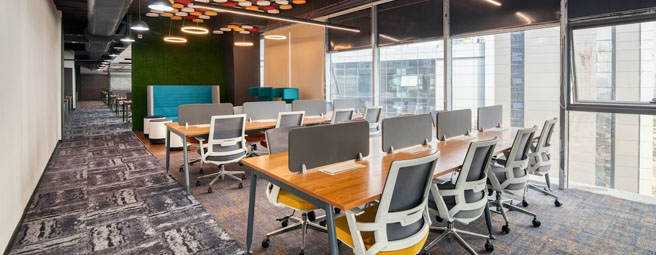
Small Business Trends Forecast for 2027
Small business owners entering 2027 are no longer experimenting with the future of work. Hybrid schedules have become the default for most knowledge-based teams. AI tools that once felt experimental are now part of daily operations. At the same time, clients continue to judge a company’s seriousness by the quality of the first phone call, the legitimacy of the business address, and the professionalism of the room where important conversations happen.
The companies that thrive will not be the ones with the biggest offices or the largest fixed costs. They will be the ones that treat physical space, professional presence, and operational support as flexible services rather than permanent obligations. This forecast-style guide examines the major small-business trends shaping 2027 and, more importantly, translates each trend into concrete infrastructure decisions—virtual offices, live receptionists, on-demand meeting rooms, and lightweight systems that keep overhead variable while client trust stays high.
Instead of another generic trend list, every section below connects a broad market force to the specific workspace and operations choices that protect flexibility, control cost, and project credibility.
Key Takeaways
1. Flexible Overhead Becomes the Default Advantage
By 2027 most growing small businesses will treat traditional long-term leases as a last resort rather than a status symbol. On-demand meeting space and virtual offices deliver the same professional footprint at a fraction of the fixed cost.
2. Hybrid Work Rewards Intentional Infrastructure
Hybrid is no longer experimental. The companies that win will pair remote days with deliberate in-person moments backed by bookable professional rooms. Structure and access beat proximity.
3. AI Handles the Repetitive Work—Humans Keep the Relationships
AI adoption continues to rise because entry costs keep falling. The highest return appears when AI frees time for client-facing work while live reception and professional addresses protect the brand.
4. Client Trust Still Travels Through Physical Signals
A kitchen-table video call works for internal updates. High-stakes pitches, interviews, and first meetings still benefit from a polished room and a legitimate business address. Credibility is an infrastructure decision.
5. Cost Control and Professional Presence Are No Longer Trade-Offs
The same tools that reduce overhead—virtual offices, live receptionists, and hourly meeting rooms—are the tools that project stability. The old choice between “look established” and “stay lean” has largely disappeared.
The 2027 Small Business Landscape: Forces That Shape Infrastructure Decisions
Four forces are converging for small businesses in 2027.
First, the real-estate market continues its shift toward flexibility. Multiple industry forecasts show the global flexible-office market expanding rapidly through the early 2030s, with compound annual growth rates commonly projected in the mid-to-high teens (see Fortune Business Insights flexible office market analysis). Corporate surveys indicate that a substantial share of larger organizations expect their portfolios to move away from traditional long leases toward flexible arrangements by 2027. Small businesses sit in the same current: many pandemic-era or pre-pandemic leases are expiring, and few owners want to re-commit to five- or ten-year terms when utilization remains uneven and growth is uncertain.
Second, AI has crossed the threshold from novelty to utility for ordinary small businesses. Surveys from 2025 and 2026 show roughly two-thirds of U.S. small businesses already using AI regularly (Salesforce and related 2026 small-business AI reports). Reported benefits include monthly cost savings in the $500–$2,000 range and the recovery of 20 or more hours of work time. Entry costs have fallen sharply; tools that once required specialized teams are now available at prices a two- or five-person company can absorb without hesitation. The practical question for 2027 is no longer whether to adopt AI, but how to embed it so that it removes low-value work without making the company feel impersonal to clients.
Third, remote and hybrid work have stopped being temporary experiments. Knowledge workers and the companies that employ them have largely settled on some form of hybrid as the steady state. The open question is operational: how do you keep collaboration, culture, and client perception strong when the team is distributed most days? The answer is rarely “more office days.” It is more often “better design of the days that are in person” plus reliable access to professional space when those days arrive.
Fourth, client and partner expectations for professionalism have not declined. A residential mailing address, an unanswered phone, or a meeting held at a coffee shop still send signals—sometimes the wrong ones—especially in professional services, consulting, agencies, and any business where trust is part of the sale. The companies that treat professional presence as optional often discover the cost only after a pitch, partnership conversation, or hiring process has already been damaged.
These four forces—flexible real estate, accessible AI, permanent hybrid work, and persistent client expectations—do not require separate strategies. They point to the same infrastructure pattern: keep the permanent footprint light, make high-quality space and presence available on demand, and protect the human layer that clients still notice.
How Remote and Hybrid Work Will Shape Small Business Operations in 2027
Hybrid work is now the dominant model for knowledge teams, yet many small businesses still treat it as an informal arrangement rather than an operating system. Research from Gallup’s workplace studies consistently shows that teams with a formal hybrid collaboration plan report meaningfully higher engagement and lower burnout. The difference is not the exact number of remote days. It is whether the in-person time is designed for the work that actually benefits from being in the same room—coaching, complex problem-solving, relationship building, onboarding, and high-stakes client conversations.
For a small business this has a direct and often overlooked infrastructure implication. A permanent office sized for the busiest days of the month sits under-utilized the rest of the time. The more efficient pattern that is emerging for 2027 is to keep individual focused work at home or in light coworking environments and to book professional meeting space only when the calendar requires it. That pattern reduces fixed cost while still giving the team and its clients access to a polished environment when it matters.
Davinci’s hourly meeting room rental and broader flexible workspaces options are built for exactly this rhythm. A consulting firm that meets clients twice a month does not need a full-time conference room. An agency that runs quarterly planning sessions does not need those rooms sitting empty the other eleven weeks. On-demand access turns space from a fixed asset into a variable cost that tracks actual use. For teams that want structured collaboration practices, see also hybrid meeting best practices.
Hybrid work also raises the visibility of the professional front door. When the team is distributed, missed calls and a residential mailing address become more noticeable. A live receptionist and a virtual business address close that gap without requiring anyone to sit at a physical front desk five days a week. The combination—remote or hybrid individual work, on-demand professional rooms for the collaborative and client-facing moments, and a reliable virtual presence—gives small businesses the operational flexibility of a distributed team without the appearance of improvisation.
Flexible Overhead as a Competitive Advantage in 2027
Traditional office leases lock capital into under-utilized square footage. Flexible models reverse the equation: cost scales with actual use. Market forecasts for flexible office space show continued strong growth through the end of the decade, driven by both corporate portfolio shifts and the needs of smaller, more agile organizations.
For a small business the practical choices in 2027 look like this:
• Maintain a virtual office for the permanent commercial address, mail handling, and any compliance or banking requirements that still expect a non-residential location.
• Book meeting rooms or day offices only for client meetings, candidate interviews, team offsites, workshops, and the occasional focused collaboration day.
• Use light coworking access when home is not ideal for focused work, rather than carrying a full private office.
This approach is especially powerful while a company is still testing its growth trajectory or operating in a cyclical industry. Expanding headcount no longer automatically triggers a lease expansion and the associated long-term commitment. Seasonal slowdowns or a decision to stay lean no longer leave the owner paying for empty space. The same logic appears in practical guidance on strategically downsizing a small business—flexible space makes those moves far less painful and far less visible to clients. You can also compare models in our post on virtual office vs coworking.
Cost control is not the only benefit. A carefully chosen virtual office address in a recognized business district still carries weight with banks, vendors, partners, and clients. The professional signal remains while the monthly cost stays predictable and modest. For a deeper look at why the address matters, see reasons you need a virtual office and how much office space rental costs. In 2027 the companies that treat space as a service rather than an owned asset will have more capital available for talent, marketing, and product development—the investments that actually compound.
AI-Supported Operations Without Losing the Human Touch
AI adoption among small businesses has moved well past the early-adopter phase. Entry-level tools now cost far less than they did even two years earlier, and most owners who use them report measurable time and cost savings once the tools are embedded in routine workflows. Common applications include scheduling, first-pass customer replies, invoice follow-up, basic reporting, content drafting, and internal knowledge search.
The highest-ROI pattern for 2027 is not “replace people with AI.” It is “let AI absorb the repetitive layer so humans can stay in the relationship layer.” That distinction matters for client trust and for employee experience. An AI system can handle after-hours FAQs and routine scheduling. A live receptionist still answers the high-value call that arrives during business hours. Automated follow-up can reduce administrative drag; a real person in a professional meeting room still closes the larger deal.
Infrastructure that supports this division of labor is straightforward and relatively low-cost:
• Virtual phone systems and live receptionist services that can integrate with AI tools for after-hours or overflow coverage.
• Clear internal processes so the team knows which tasks stay human and which can be automated.
• Occasional in-person meetings for the conversations that still require presence, tone, and relationship.
Companies that treat AI purely as a cost-cutting exercise often discover later that the brand feels colder or less responsive to clients. Companies that pair AI efficiency with intentional human touchpoints keep both the savings and the relationships. In 2027 the competitive edge will belong to the small businesses that use AI to buy time for the work only people can do well. Supporting services such as live receptionist services and mail handling services help keep the human layer intact.
Building Client-Facing Trust Without a Traditional Office
Clients rarely ask whether a company holds a five-year lease. They notice whether the phone is answered professionally whether the business address looks legitimate on a contract or website, and whether the room for a pitch or interview feels polished and intentional. These signals have always mattered. Hybrid and remote work simply make their absence more visible.
A virtual office solves the address and mail problem. A live receptionist solves the phone problem. On-demand meeting rooms solve the “we need a real room next Tuesday” problem. Together they create the external appearance of a stable, established business while the internal cost structure remains light and scalable. For more on the address distinction, see what is the difference between a business address and a private address.
This combination is especially useful for consultants, professional-service firms, agencies, coaches, and any company whose clients still expect to meet in person for larger decisions. The kitchen table or local coffee shop works for internal stand-ups and quick check-ins. It rarely works for the final presentation to a new enterprise account, a sensitive interview, or a partnership discussion where perception influences outcome. When you do need the room, resources such as the meeting room amenities guide and booking meeting rooms for teams help you choose the right setup.
In 2027 the small businesses that look established will not necessarily be the ones with the largest offices. They will be the ones that have deliberately designed their professional presence—address, phone, and meeting space—so that every client-facing moment reinforces competence and stability.
Trend-to-Action Table: Turning 2027 Trends into Infrastructure Decisions
|
2027 Trend |
Risk If Ignored |
Recommended Infrastructure Move |
Expected Outcome |
|
Permanent hybrid work |
Ad-hoc collaboration, culture drift, uneven client experience |
Formal hybrid plan + bookable professional meeting rooms |
Higher engagement, cleaner client interactions, lower fixed cost |
|
Rising AI adoption |
Time still spent on low-value tasks; brand feels impersonal |
AI for repetitive work + live receptionist for high-value calls |
20+ hours/month recovered without losing the human layer |
|
Preference for flexible real estate |
Locked into under-used long leases as markets shift |
Virtual office + hourly or daily meeting space |
Lower fixed overhead, easier scaling up or down |
|
Clients still judge professionalism |
Residential address or missed calls erode trust |
Commercial virtual address + live answering service |
Stronger first impression and higher close rates |
|
Ongoing cost pressure on small teams |
Overhead grows faster than revenue |
Variable space and presence costs instead of fixed leases |
Predictable monthly spend that tracks actual use |
Practical Investments That Keep Small Businesses Flexible in 2027
Three categories of investment consistently appear in the companies that stay nimble as the 2027 environment takes shape.
1. Presence without ownership
A virtual office provides the permanent commercial address, mail handling, and any location-based credibility that banking, vendors, or clients still expect. Live receptionists handle the phone so that every call receives a professional response. Neither requires a long-term real-estate commitment or a physical front desk staffed five days a week. Related reading: tax deductions for virtual offices.
2. Space on demand
Meeting rooms and day offices booked by the hour or the day cover the specific moments that still need a real room—client pitches, interviews, team workshops, and complex collaboration. Utilization data replaces guesswork about how much space is actually required. Companies stop paying for empty rooms and start paying only for the hours they use.
3. Lightweight systems that compound
AI tools for scheduling, follow-up, first-draft work, and internal search free capacity. Clear hybrid norms and occasional, well-designed in-person days protect culture and relationship quality. The combination keeps both productivity and morale higher than either pure remote or pure traditional office models typically deliver.
None of these investments require large capital outlays. They do require a shift in mindset: treat physical space and professional presence as services that can be turned up or down rather than as fixed assets that must be owned or leased for years. That mindset is the operational foundation for 2027.
Closing
The small-business environment in 2027 will reward owners who treat workspace and professional presence as flexible services rather than fixed obligations. Hybrid work, AI efficiency, cost pressure, and client expectations are not separate problems. They point to the same infrastructure pattern: keep the permanent footprint light, make high-quality space available on demand, and protect the human layer that clients still notice.
Davinci Virtual and Davinci Meeting Rooms exist for exactly this operating model—professional addresses, live call answering, and meeting space that scales with actual need. The companies that adopt that pattern early will enter 2027 with lower overhead and stronger client trust than those still carrying legacy leases sized for a different era.
Ready to map your 2027 infrastructure? Get a live quote or explore virtual office solutions and meeting rooms.
Frequently Asked Questions
1. What small business trends should owners watch most closely in 2027?
The four that translate most directly into infrastructure decisions are the permanent shift to hybrid work, continued AI adoption for routine operations, the broader market move away from long traditional leases toward flexible space, and the ongoing importance of professional first impressions. Each of these can be addressed with virtual offices, live receptionists, and on-demand meeting rooms rather than a full-time lease. Practical starting points appear in our guides on flexible workspaces and strategically downsizing a small business.
2. How will remote and hybrid work affect small businesses in 2027?
Hybrid will remain the dominant model for knowledge work. The companies that treat it as an intentional system—clear norms, protected in-person time for collaboration and client work, and professional space available when needed—will outperform those that leave it informal. On-demand meeting room rental is one of the simplest ways to keep the in-person layer strong without carrying a permanent office. See also hybrid meeting best practices.
3. What operational investments help small businesses stay flexible?
Prioritize variable costs over fixed ones: virtual business addresses, live answering services, and hourly or daily meeting space. Pair those with AI tools that absorb repetitive administrative work so the team can stay focused on clients and revenue. The combination keeps overhead low while professional credibility stays high.
4. Do small businesses still need a physical office in 2027?
Most knowledge-based small businesses do not need a full-time traditional office. They do need reliable access to professional space for the specific moments that still benefit from it—client meetings, interviews, team workshops, and complex collaboration. A virtual office plus on-demand rooms covers that need more efficiently than a long lease for the large majority of service and knowledge firms.
5. How can a small business look established without high fixed costs?
Use a commercial virtual office address for registrations, banking, and client communications. Add a live receptionist so every call is answered professionally. Book polished meeting rooms only when the calendar requires them. These three elements create the external signals of a stable company while the internal cost structure remains light and scalable. Explore current virtual office options and related resources such as 7 use cases for freelancers to use a virtual address.



Categories
Subscribe to Our Blog
Archive

Talk to an expert
Want help finding the ideal meeting room? Give us a call
Book the Perfect Meeting Room Now
Find a Meeting RoomServices
Meeting Spaces Coworking US Meeting Spaces International Meeting Spaces International Coworking Spaces US Coworking Spaces About our Workspaces About our Services Meeting Space Rates Meeting Rooms Near MeCUSTOMER CARE
Login Sign Up FAQ Infographics Videos Contact us Chat with us Privacy Policy Cookie Policy Terms of Service Health & Safety